Game Designer’s Blog: Volume 3
We had successfully made our first board game, and it worked, but Chip and I disagreed on its direction. After a few days of reflection, we got together again to talk it through. I wanted a game that everyone could play, Chip liked it tough the way it was. Somewhere in our conversation, Chip brought up, “why can’t it be both?” (This is classic Chip by the way, always looking for the simplest solution while challenging the status quo).
“What do you mean both?” I asked.
“Have one deck of Building Cards that cost 7 Resources for the full, epic adventure style game you and I love, and another deck of the same Buildings but only costing 5 Resources. That way, based on who you are playing with and how long you want the game to last, you have options and can tailor the game to you.”
His answer hung in the air for a minute while I pondered the possibilities. Why not, I thought. Other games have easy mode and hard mode, and it didn’t really change the way the game worked. And let’s face it, not everyone wants a long or complex game all the time. In fact, it could help expose a larger audience to the game. First timers could try it, like it, and the game could grow as they did.
“Perfect. I’ll get to work on it,” I said.
A few weeks later, we tried it again and the problem was solved. We had a complete, working, and customizable board game. How cool is that, Mal?
Over the next few months, we kept playing Life Out West, sharing it with friends, and made a rulebook. Strangely enough, it was quickly becoming our favorite game to play (even over published ones!). As months passed, I found a new job, our family moved, and Chip and I were reunited once again. Now that we lived in the same town, we were back to hanging out all the time, playing games, and sharing Life Out West with others. Soon, other people were saying it was one of their favorite games and asked to play it more. Then someone said, “you should publish this. I would totally buy it!”
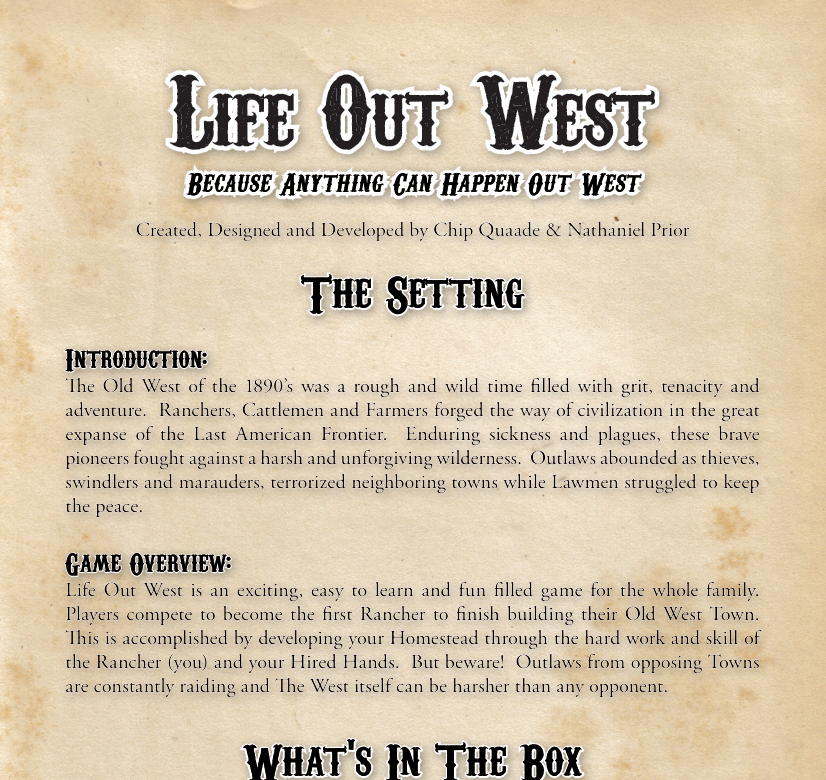
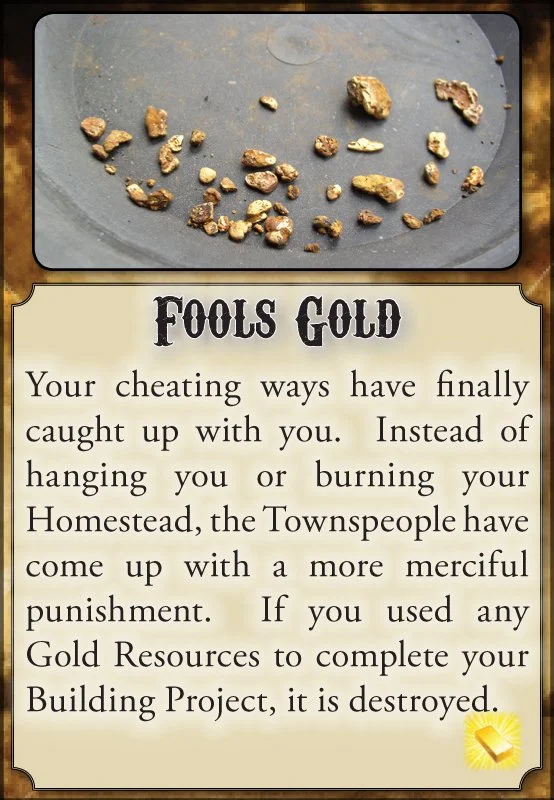
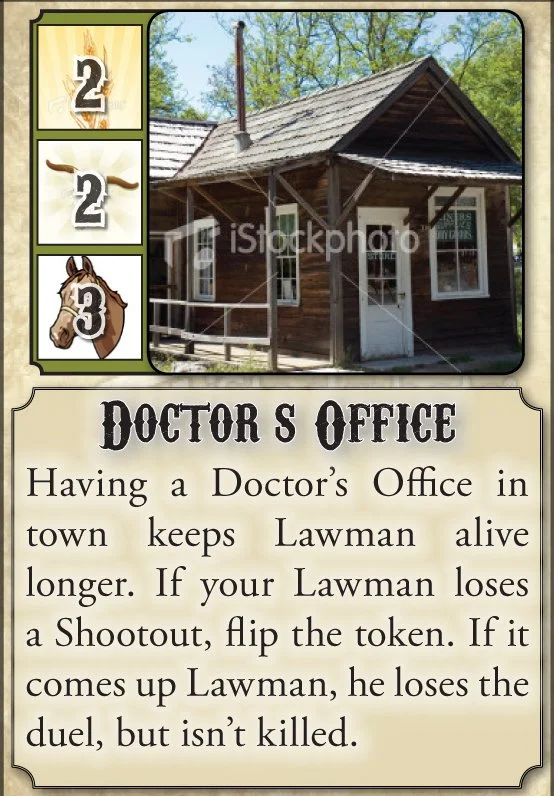
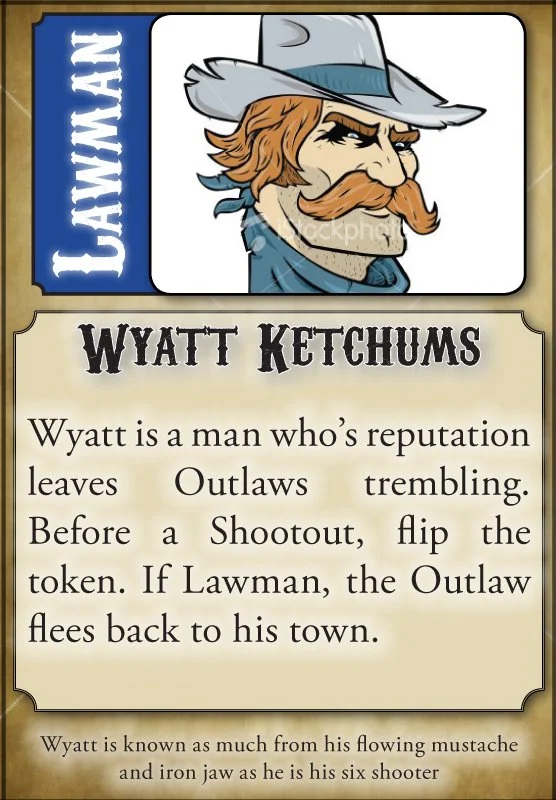
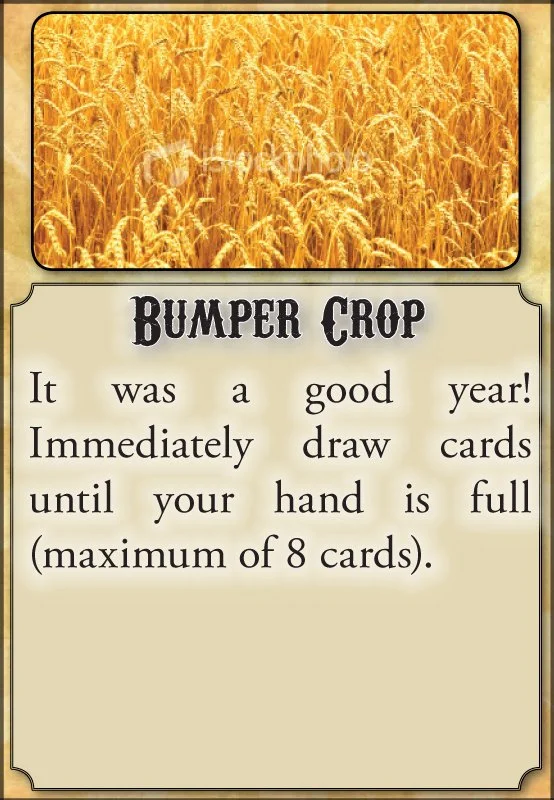
Early Rulebook for Life Out West
When sending game submissions, we didn’t have a sale sheet and often sent the first page of our rulebook with prototype cards and a pitch letter.
I didn’t know anything about having a game published, and in 2009, the game industry was very different. Back then, there were much fewer game publishers and Kickstarter was not yet a thing. I scoured the internet for every possible game publisher I could find and started researching (thank you boardgamegeek!). To my dismay, most publishers did not take game submissions. They generally either had their own staff or only worked with agents who represented designers. Some did take submissions, so I made a list and we started emailing. Most of the time, we didn’t hear back. One company did say yes so we sent a copy for them to play. They said they liked it and offered some design feedback (wanting to make it more of a euro strategy game). We did more research on the company, talked about the direction of the game, and our best path to wide-spread distribution. In the end, it wasn’t a good fit.
Self-publishing also seemed like a daunting task. Again, this was 2009 and it wasn’t as easy to navigate manufacturing and direct sales. Plus, neither Chip or I were in a position to truly start a new company. We were in the middle of family life raising kids and lacked the time and money for a side business.
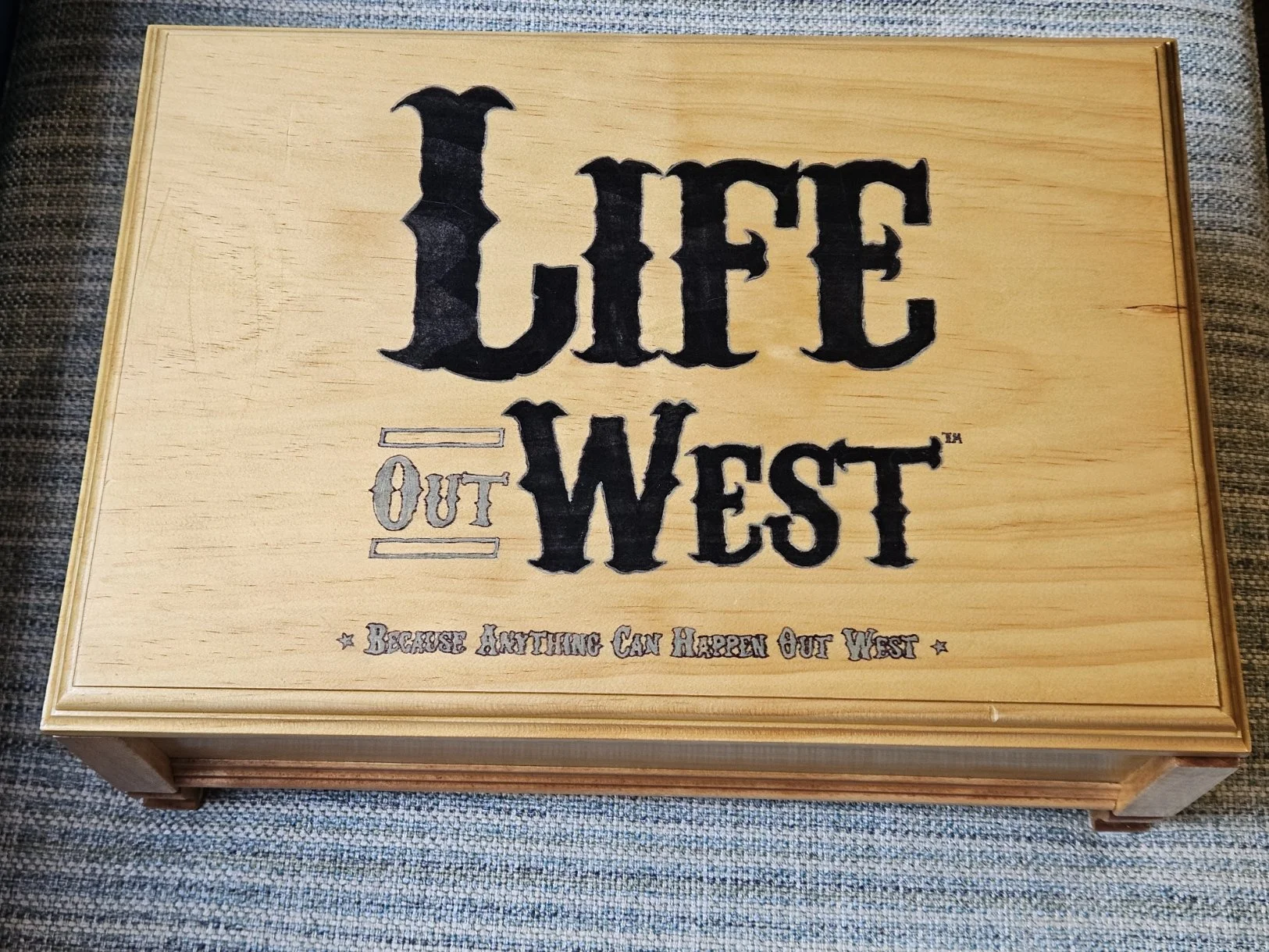
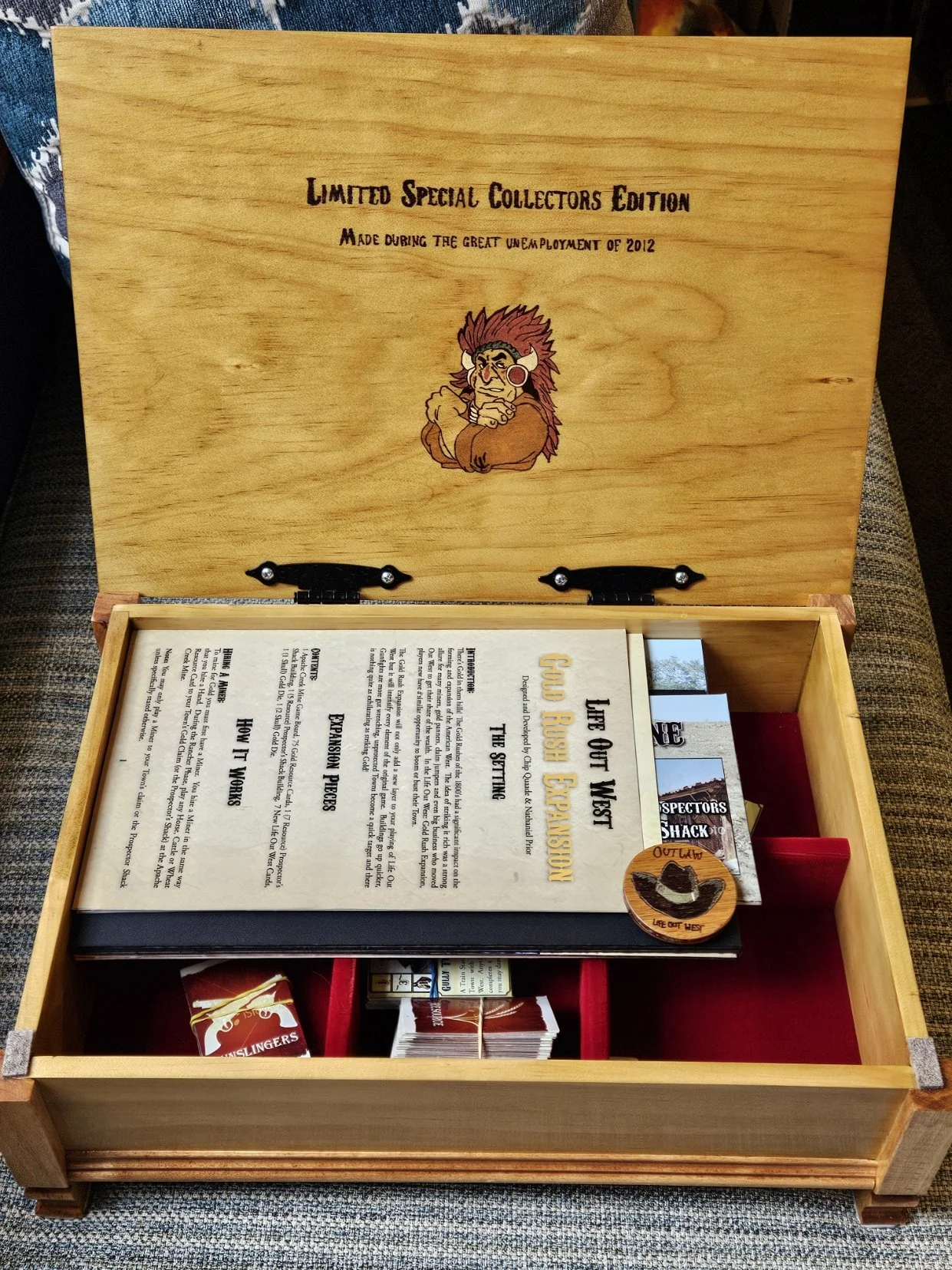
And so, our game sat. Sure, we would still play it with friends and introduce it to others, but the dream of having it published and on the game shelves seemed lost. For one Christmas, I even made special “Limited Special Collector’s Edition” of the game in a wooden box with velvet interior for Chip, my dad, and myself. I figured, if it was never going to be published, at least we would have a very nice memento to remember that time we made a board game.
And some things that should not have been forgotten, were lost. History became legend. Legend became…. okay, maybe it’s not as dramatic as losing The One Ring, but yeah, things happened and life got busy. In fact, real life seemed to be going a very different directions for both Chip and I. I moved away, careers took off, and the Middle-Age began. Until one day, when something unexpected happened. What if, you could do anything you wanted, and had the chance to rewrite the rest of your life?
To Be Continued…